Consider using absorbent materials like cat litter or commercial absorbents to remove oil stains from concrete driveways — these materials draw oil out effectively. Alternatively, opt for commercial concrete cleaners with potent degreasers that penetrate deep for thorough cleaning. DIY solutions such as powdered laundry detergent paste or vinegar can also be effective. For tougher stains, use high-pressure washing techniques with at least 3,000 PSI, applying a degreaser before washing and maintaining a safe distance to avoid damage — multiple rounds may be needed for stubborn stains. For best results, consult top-rated driveway contractors for professional advice on stain removal and long-term maintenance.
Absorbent Materials
Absorbent materials work by drawing oil out of the concrete surface, making it easier to clean and restore the driveway’s appearance. Common absorbent materials include cat litter, baking soda, sawdust, or commercial absorbents specifically designed for oil spills.
To use them effectively, start by generously covering the stained area with the chosen absorbent material. Gently press it into the stain using a broom or your foot to guarantee good contact, and let it sit for several hours or overnight to absorb the oil thoroughly.
Once the absorbent material has had time to work, sweep or scoop it up and dispose of it properly. Stubborn stains may need this process repeated a few times until the oil residue is significantly reduced or eliminated.
Commercial Concrete Cleaners
Commercial concrete cleaners are specially formulated to eliminate oil stains from concrete driveways. These cleaners typically contain potent degreasing agents that break down oil molecules, making it easier to lift stains from the surface, and they’re able to penetrate deep into the concrete’s pores for thorough cleaning.
Most commercial cleaners come in concentrated forms that need to be diluted with water before application — following the manufacturer’s instructions on dilution ratios and application methods is essential. Some cleaners may also require scrubbing or agitation to enhance effectiveness. Consider the severity of the stain, the type of concrete surface, and any environmental considerations when choosing a product, and test it on a small, inconspicuous area first.
DIY Cleaning Solutions
For homeowners seeking cost-effective alternatives, homemade cleaning solutions can be a practical option. One popular option involves mixing powdered laundry detergent with water to create a paste, applying it directly to the stain, letting it sit for a few hours, and scrubbing with a stiff brush before rinsing with water.
Baking soda or cornstarch is another effective option — sprinkle either directly onto the oil stain to help absorb it, let it sit for a few hours or overnight, then sweep it away and rinse the area with water.
Vinegar is also a common household item that can help remove oil stains. Pouring undiluted vinegar onto the stain, letting it sit for a while, then scrubbing with a brush and rinsing with water lets the acidic properties of vinegar break down the oil — an eco-friendly, budget-friendly option for maintaining a clean driveway.
Pressure Washing Techniques
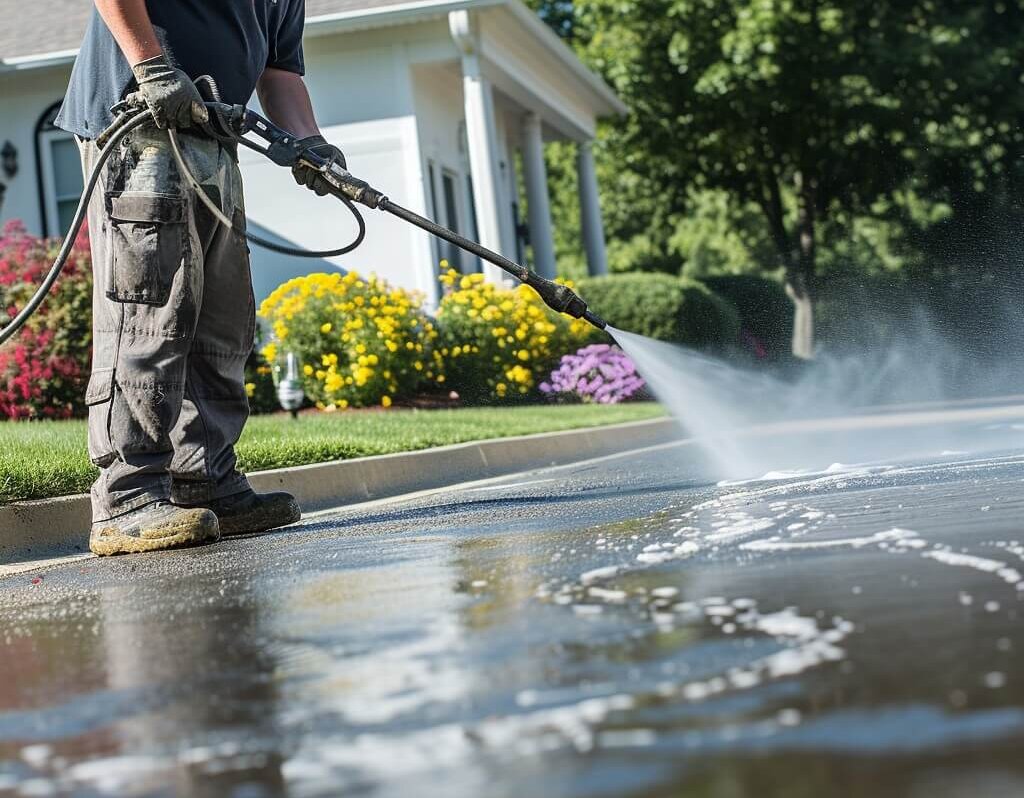
Proper pressure washing technique provides a thorough and efficient way to remove stubborn oil stains. When dealing with oil stains on concrete, use the right pressure washer with adequate power and appropriate nozzles — a PSI of at least 3,000 is recommended for tackling tough stains.
Before starting, apply a degreaser or detergent specifically designed for oil stains to the affected areas, which helps break down the oil and makes it easier to wash away. When using the pressure washer, maintain a safe distance from the concrete surface to prevent damage, and move the spray evenly across the stained area to ensure complete coverage.
After pressure washing, allow the driveway to dry thoroughly before inspecting the results. Stubborn stains may require multiple rounds of pressure washing to fully eliminate.