
Driveways
Broom finish, pavers, turf ribbons, and stone borders — the hardest-working slab on your property, built on a base that keeps it flat for decades.

The craft
A driveway is only as good as its base
Your driveway carries more weight, more often, than any other surface on your property. The part that decides whether it lasts is the part you never see: the grading, compaction, and reinforcement underneath. We dig to proper depth, compact the base, set steel, and pour at full thickness — then place control joints where the slab wants to move, not just where they look tidy.
It’s also the first thing everyone sees from the street. Whether that means a clean broom-finish pour, floating panels with turf ribbons, or an interlocking paver drive with a bordered edge, we build driveways across Torrance and the South Bay that pull their weight and raise the curb appeal doing it.
Finishes & options
- Broom-finish concrete
- Interlocking pavers
- Turf & gravel ribbons
- Stone & brick borders
- Exposed aggregate
- Decorative scoring
- Driveway resurfacing
Paver driveways
Interlocking pavers earn their keep: they flex with the ground instead of cracking, they can be repaired one stone at a time, and no two drives look alike. These are set over a compacted base with bordered edges that lock the field in place.
Before & after
The same address, a different first impression
Most driveway projects start with something failing — cracked slabs, bare dirt, or asphalt past its prime. Here’s what the same properties looked like before and after our crew was done.
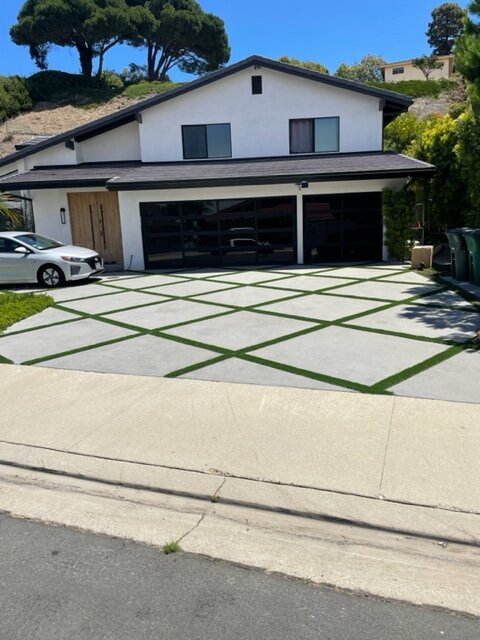
Modern panels & ribbon joints
The look South Bay remodels ask for by name: oversized concrete panels floated apart with ribbons of turf or pebble. The joints do real work too — they’re where the slab is designed to move, so the panels stay crack-free.
Classic concrete & decorative borders
A well-poured broom-finish driveway is still the best value in concrete — and a stone, brick, or aggregate border turns it into something custom without the custom price tag.
Built to last
This driveway is over 25 years old
We poured this drive more than a quarter century ago, and it’s still flat, still crack-free, and still parked on every day. That’s not luck — it’s what proper base compaction, reinforcement, and honest thickness buy you. When we say a driveway should outlast the truck that parks on it, this is what we mean.
Get a free estimate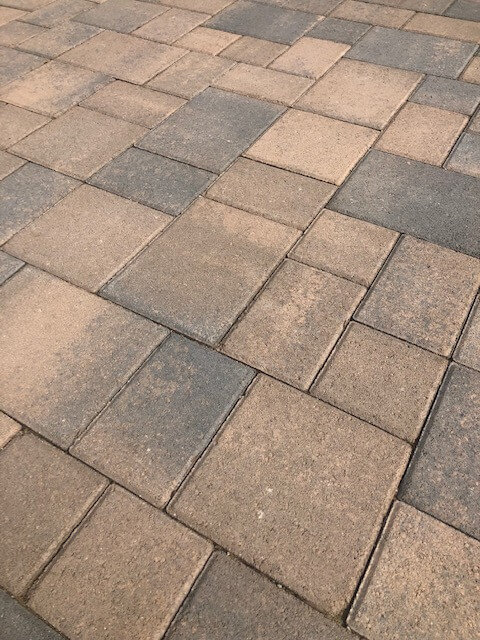
Common questions about driveways
How soon can we park on a new driveway?
You can usually walk on new concrete after a day or two, but keep vehicles off it for about seven days while it reaches strength. Paver driveways are different — they’re ready to drive on as soon as we finish setting and compacting them.
Does my old driveway need a full tear-out?
Not always. If the existing slab is sound but tired, resurfacing or an overlay can renew it for much less than a replacement. If it’s cracked through, settling, or draining toward the house, a proper tear-out and new base is money better spent — we’ll tell you honestly which one your driveway needs.
What are my options besides plain gray concrete?
Plenty. Interlocking pavers, turf or gravel ribbon joints, stone and brick borders, exposed aggregate, and decorative scoring all show up in the projects on this page. A border or ribbon detail adds character for a modest bump in cost; pavers cost more up front but can be repaired stone by stone.
How long should a driveway last?
Built on a properly compacted, reinforced base, a concrete driveway should last 30 years or more — one of ours is still going strong after 25+ years, and we have the photo on this page to prove it. The base preparation you can’t see matters more than anything you can.
What does a new driveway cost?
It depends on size, access, whether the old surface needs to come out, and the finish you choose — a broom-finish repour and a bordered paver drive are very different projects. Estimates are always free: call (310) 539-8023 and we’ll walk it with you.
Let’s build something that lasts
44 years of South Bay craftsmanship, one phone call away. Estimates are always free.