
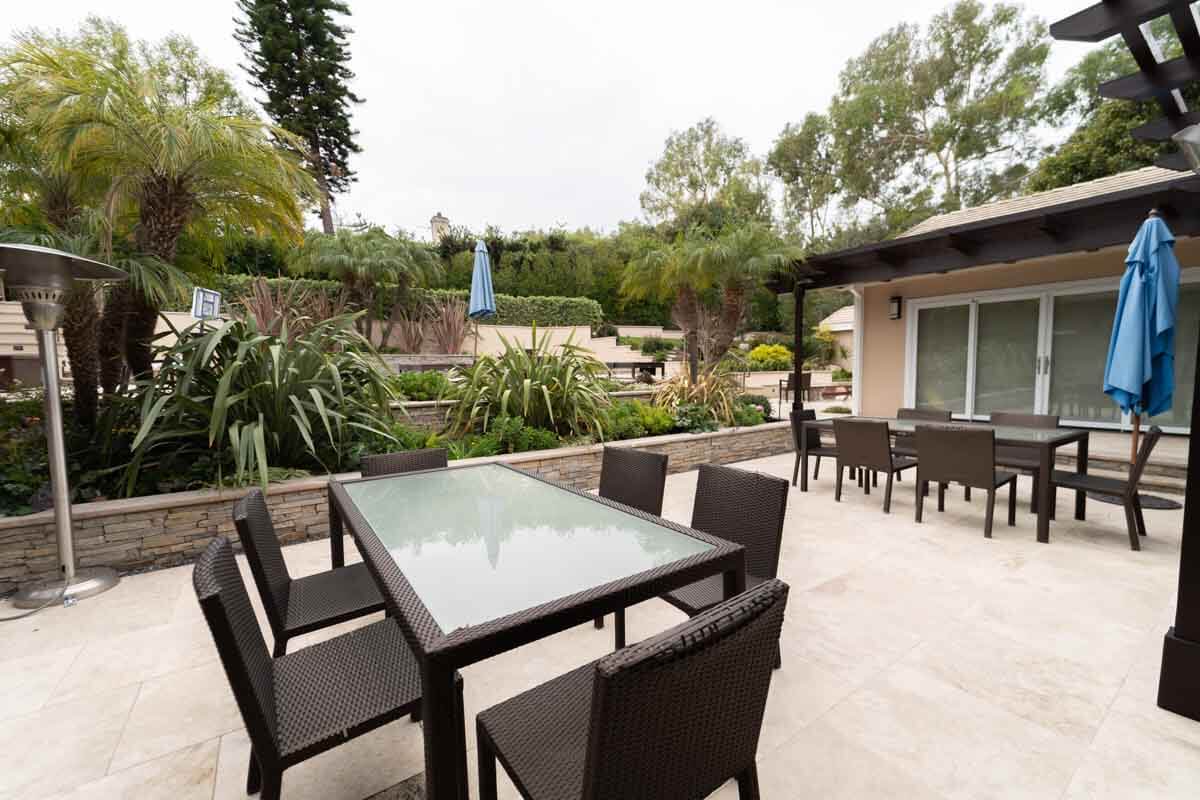
Patios & Walkways
Flagstone, pavers, brick, and colored concrete — the outdoor surfaces your family actually lives on, graded right and built to stay put.

The craft
The finish gets the credit — the base does the work
Patios and walkways fail from underneath: soil that was never compacted, water with nowhere to go, slabs poured thin. So that’s where we start — grading everything to drain away from the house, compacting the base, and setting reinforcement before any concrete is poured or a single stone goes down. It’s the part of the job nobody photographs, and it’s the reason the photos on this page still look this way.
The finish is where a yard gets its personality. Natural flagstone and bluestone, interlocking pavers, herringbone brick, colored concrete steps — after 44 years working across Torrance, Palos Verdes, and the beach cities, we’ve laid just about every surface a South Bay backyard can ask for. If it’s where you eat outside, walk in from the street, or climb the slope in your own yard, it’s on this page.
Finishes & materials
- Natural flagstone & bluestone
- Interlocking pavers
- Brick & herringbone
- Colored concrete steps
- Exposed aggregate
- Slate & stone veneer
- Stone & brick borders
- Turf & stone combinations
Patios & outdoor living
Flagstone, pavers, and natural stone — the surfaces that decide where the table goes, where the fire pit lives, and how many months of the year the backyard actually gets used.
Before & after
The same yard, living a different life
Most of these projects started with a surface that had quit — cracked walks, crumbling steps, slabs patched past saving. Here’s what the same spots looked like before and after our crew was done.
Walkways & front entries
The first thirty feet everyone walks before they reach your door. Brick, stone, aggregate, and paver walks — and the porches and landings they lead to.
Garden steps & hillside stairs
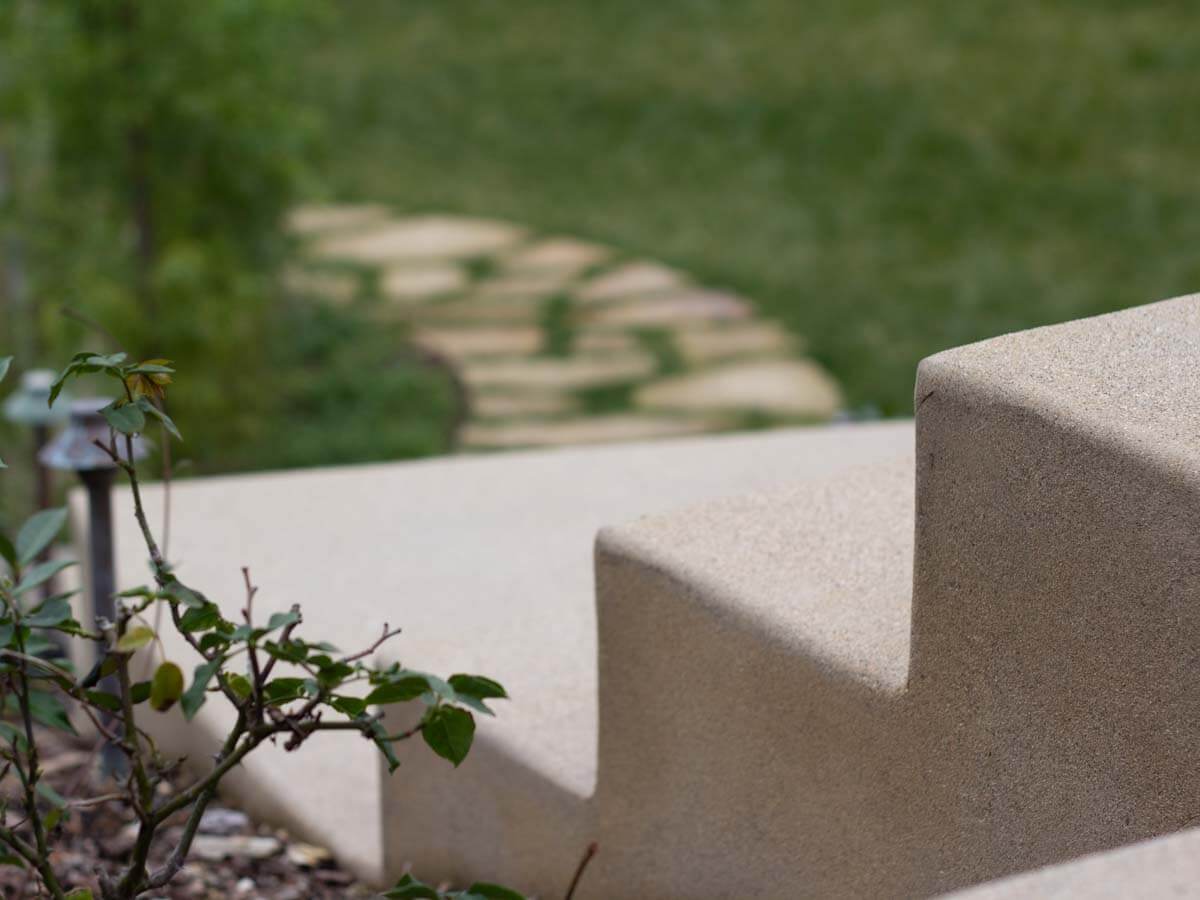
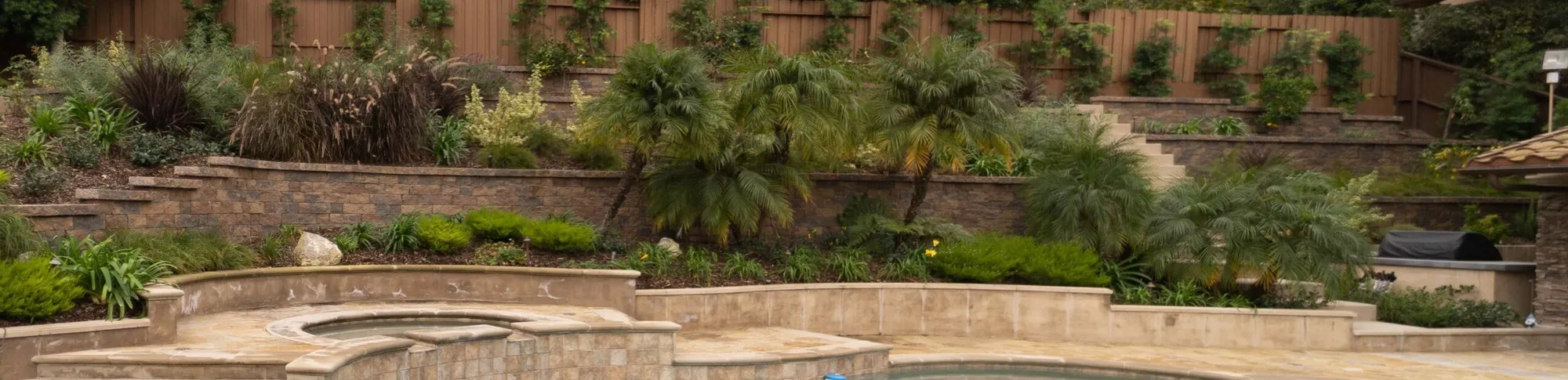
Half the South Bay is built on a hill. Steps are how a sloped yard becomes a usable one — curved through a garden, faced in stone or slate, or run as a full staircase with walls to match.
Common questions about patios & walkways
Concrete, pavers, or natural stone — which should we pick?
All three are on this page, and each earns its place. Poured concrete costs the least and takes color, borders, and aggregate finishes. Pavers flex with the ground and can be repaired one unit at a time. Natural flagstone and bluestone are the premium look that never dates. We’ll tell you honestly which one fits your yard, your slope, and your budget.
Can you extend or replace part of an existing patio?
Yes — sometimes the right answer is adding on, and sometimes it’s a tear-out and one clean pour, like the patio extension in the before-and-after above. One thing we’re always straight about: new concrete never perfectly matches old concrete, so we’ll tell you up front whether an addition will blend or whether repouring the whole surface will look better.
What about drainage and slope?
It’s the first thing we look at. Every patio and walkway we build is graded to carry water away from the house, and on hillside lots — which is half the South Bay — that usually means steps, terracing, or walls designed for the grade rather than fighting it. A properly compacted base underneath is what keeps the surface flat once the water is handled.
How soon can we use a new patio or walkway?
Pavers are ready as soon as we finish setting and compacting them. Poured concrete takes a day or two before foot traffic, and about a week before you drag the heavy furniture back. Mortar-set stone needs a few days for the bed to cure. We’ll give you exact dates for your project before we start.
What does a new patio or walkway cost?
It depends on size, access, whether an old surface has to come out, and the material — a broom-finish walkway and a bluestone courtyard are very different projects. Estimates are always free: call (310) 539-8023 and we’ll walk the yard with you.
Let’s build something that lasts
44 years of South Bay craftsmanship, one phone call away. Estimates are always free.