To paint a concrete driveway effectively, thoroughly clean the surface and repair any cracks. Choose a high-quality concrete or masonry paint suitable for exteriors, apply a concrete primer for better adhesion, and use a roller or sprayer for even application. Consider adding a concrete sealer for added protection, and clean the driveway regularly afterward, addressing spills promptly. Expert driveway contractors recommend inspecting for damage and repairing it promptly to prevent further deterioration, and reapplying a fresh coat of sealer every few years. Mastering these steps leads to a long-lasting, professionally painted concrete driveway.
Surface Preparation
Proper surface preparation is vital before painting a concrete driveway to guarantee that the paint adheres well and has a long-lasting finish. Start by thoroughly cleaning the driveway — remove any dirt, debris, and oil stains using a pressure washer, scrub brush, and degreaser, then allow the driveway to dry completely.
Next, inspect the concrete for cracks, holes, or uneven areas. Repair these imperfections using a concrete patching compound and sand down any rough spots to ensure a smooth surface.
Once the surface is clean and smooth, etch the concrete to promote better paint adhesion using an etching solution to create a slightly rough texture — especially important if you’re using a water-based paint.
Paint Selection
Choosing the right paint is crucial for a long-lasting, visually appealing finish. Opt for a high-quality concrete or masonry paint specifically formulated for exterior use, created to withstand the harsh elements and heavy traffic a driveway is exposed to regularly.
Acrylic paints are popular for concrete driveways due to their durability and UV resistance, offering a finish resistant to fading, cracking, and peeling. Epoxy paints are another strong option, known for their exceptional durability and chemical resistance — well suited for driveways that may encounter oil or other spills.
Before purchasing any paint, make sure it’s labeled for use on concrete surfaces, and consider color choices, finish (glossy or matte), and the level of traffic the driveway typically endures.
Application Techniques
- Surface Preparation: Clean the concrete surface thoroughly to remove dirt, oil, and debris. Repair any cracks or holes and allow the surface to dry completely before starting to paint.
- Priming: Apply a concrete primer to create a strong bond between the surface and the paint, helping it adhere better and preventing peeling or flaking over time.
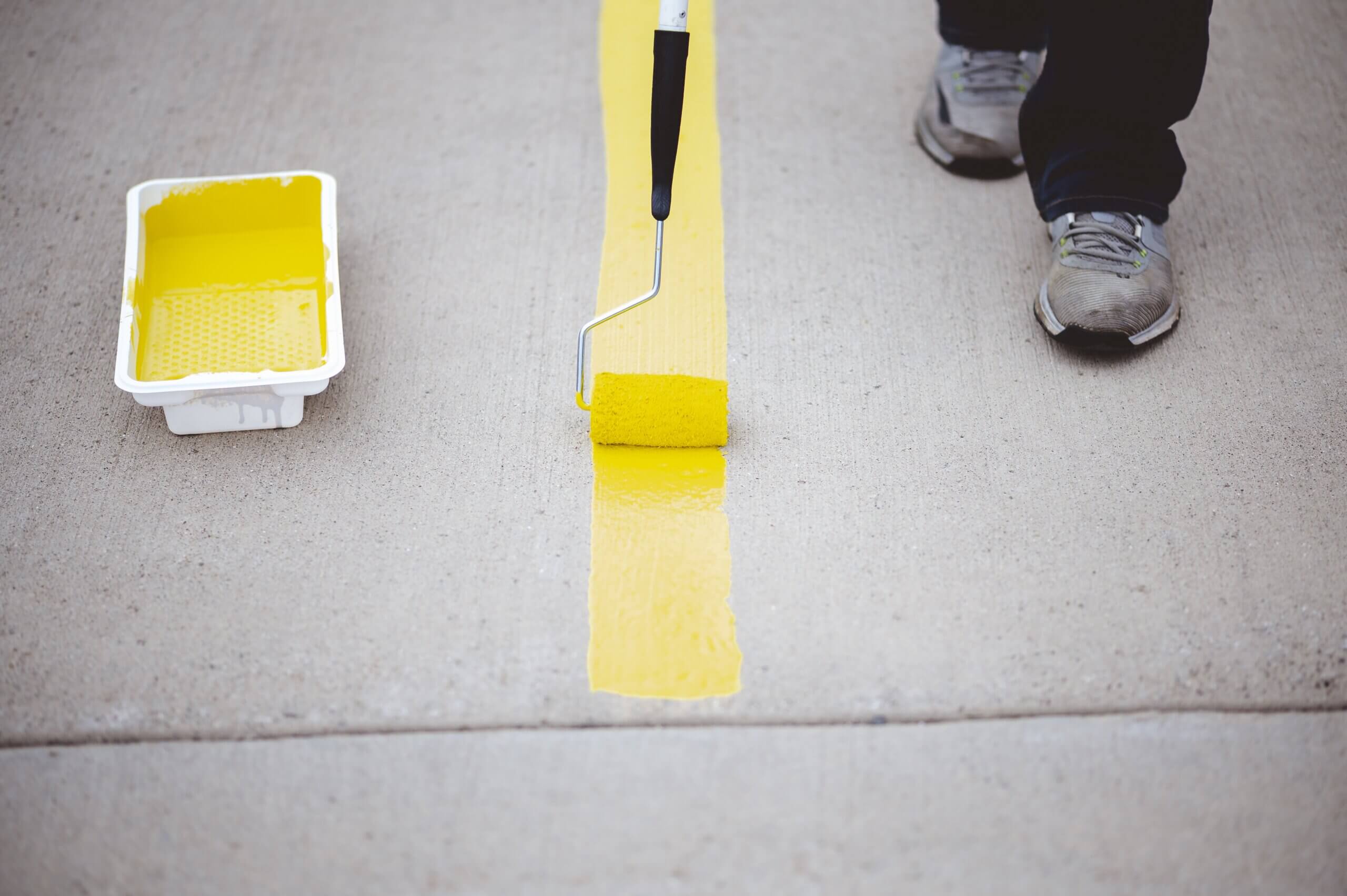
- Paint Application: Use a high-quality paint suitable for concrete surfaces, applied evenly with a roller or sprayer. Work in small sections to ensure uniform coverage.
- Sealing: Once the paint has dried completely, apply a concrete sealer to protect the finish from UV rays, water damage, and general wear and tear.
Maintenance Tips
Regular cleaning helps maintain the appearance and durability of a painted concrete driveway. Sweep away debris and dirt regularly, wash the driveway with a mild detergent and water, and address spills or stains promptly before they become stubborn marks.
Periodically inspect the driveway for signs of wear and tear, such as chipping or peeling paint, and repair damage promptly to prevent it from spreading. Applying a fresh coat of sealer every few years helps protect the paint from fading and extends its lifespan.
During winter, use plastic shovels instead of metal ones to remove snow and ice, since metal tools can scratch the paint, and avoid harsh chemicals for snow removal that can damage the paint and concrete underneath.